
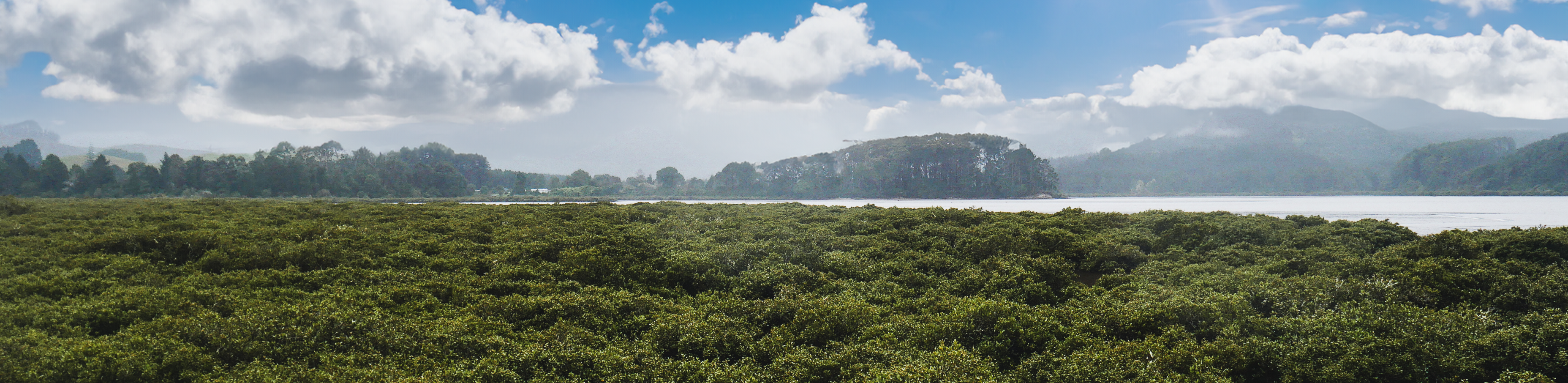
Mangrove forests are key blue carbon ecosystems that provide essential services such as carbon sequestration, nutrient cycling, and coastal water decontamination. These functions are largely mediated by the activity of sediment microbial communities. However, a detailed understanding of how these microbial assemblages vary across spatial and temporal scales, and the ecological processes driving this variation, remains limited, particularly in arid mangrove systems.
We used high-throughput amplicon sequencing (16S rRNA) from mangrove forest sediments in geographically distinct arid regions (Australia and Saudi Arabia), with a focus on both spatial (local to biogeographic) and temporal (seasonal) dynamics. We observed that bacterial community composition varied more strongly along local intertidal gradients within individual forests than between forests across continents. Temporal variation, particularly in the Red Sea, revealed marked shifts in microbial composition and alpha diversity linked to seasonal changes in sea level. In summer, reduced tidal inundation led to high-salinity, high-temperature conditions, especially in inland shrub zones, resulting in decreased diversity and increased dominance of stress-tolerant taxa.
While compositional differences were driven by local environmental factors and seasonally shifting selection pressures, co-occurrence network analyses revealed that microbial community structure—the patterns of potential biotic interactions—differed more markedly at broader biogeographic scales. These findings suggest a decoupling between microbial composition and structure, where similar taxa may assemble differently in distinct regions due to differences in selection, dispersal limitation, and environmental filtering.
Our results underscore the importance of fine-scale environmental variation and seasonal dynamics in shaping mangrove soil microbiomes. This complexity is critical to consider when evaluating microbial contributions to biogeochemical cycling and designing effective conservation and restoration strategies for these vulnerable ecosystems.
The publications resulting from this work can be found here and here.

 Coastal Carbon